
How to Tell if Your Digital Marketing Agency Is Legitimate
You can verify a digital marketing agency by auditing their public footprint, checking for verifiable client testimonials, and assessing the transparency of their reporting and communication. A legitimate firm will provide clear access to performance data, show consistent professional activity, and avoid making unrealistic promises about instant results.
Finding the right partner to grow your business is a high-stakes decision. With the proliferation of agencies in the digital space, it is vital to discern between reputable professionals and those that may not deliver on their claims. This guide outlines how to evaluate an agency’s credibility and protect your business investment.
Evaluating an Agency’s Digital Presence
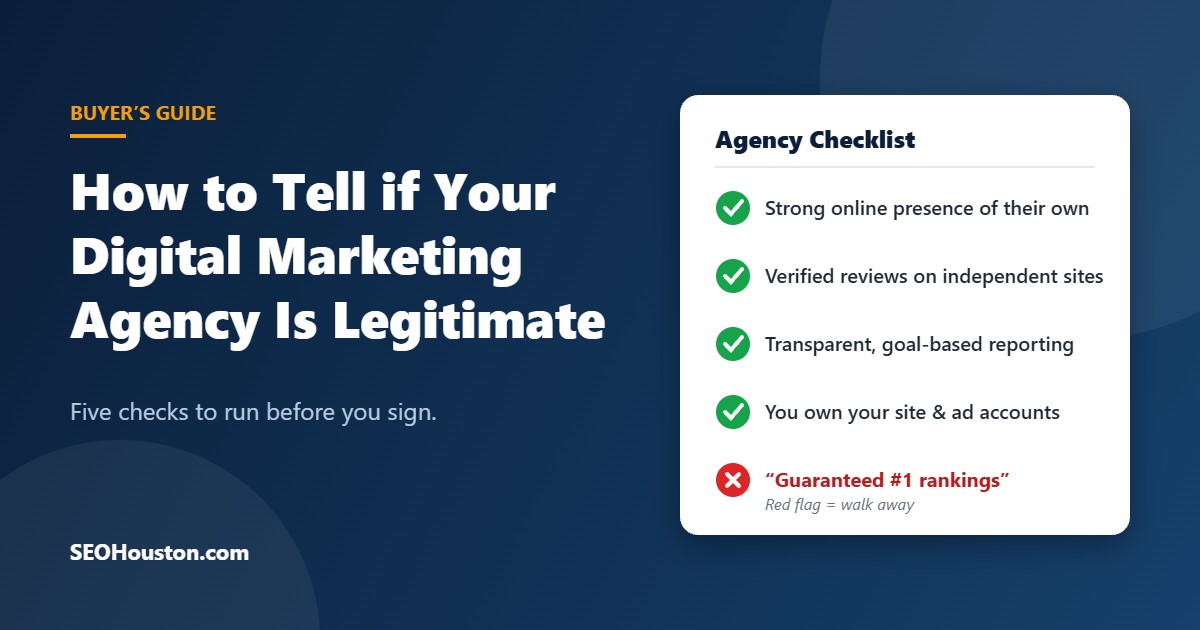
A legitimate digital marketing agency should maintain a professional, updated website that showcases their own expertise. If an agency cannot demonstrate a strong online presence for itself, it is unlikely they can successfully manage one for your business. Look for current blog content, active social media profiles, and case studies that highlight their specific strategies and industry knowledge.
Furthermore, verify the agency’s contact information, including a physical business address and professional email domains. Transparency in their own marketing efforts is the first indicator of their operational maturity and technical competence. An agency that is proficient in optimizing its own online presence is more likely to do the same for its clients, reflecting a deep understanding of SEO, content marketing, and social media engagement.
Authenticating Client Testimonials and Reviews
Client reviews are essential, but you should look for verifiable proof beyond a simple text quote on a website. Check independent platforms like Google Business Profiles, Clutch, or industry-specific review sites to see how the agency interacts with past clients. Pay close attention to how they respond to criticism, as this reflects their professional ethics and customer service standards.
Reach out to businesses that have public testimonials if possible. A legitimate agency will often have a portfolio of work or long-term partnerships that suggest reliability. If an agency refuses to provide references or appears to have only anonymous reviews, treat it as a significant red flag. Positive reviews that are detailed and specific, discussing particular strategies and outcomes, are generally more trustworthy than vague or overly enthusiastic endorsements.
Assessing Reporting, Communication, and Goal Alignment
A reputable agency treats your data as your own. Before signing a contract, ask how they report performance and how often they communicate. Legitimate firms provide data-driven reports that connect marketing activities to your specific business goals, rather than using vanity metrics that lack context. You should expect regular updates and proactive communication from an account manager regarding strategy, not just automated reports.
Furthermore, an agency’s success must be measured by its contribution to your objectives, such as increased leads, sales, or brand awareness. If an agency ignores your core business goals in favor of broad, non-specific traffic numbers, it indicates a disconnect from your true needs. A true partner works to define what success looks like for your organization and tailors their methodology to reach those targets transparently.
Identifying Common Marketing Red Flags
Be wary of agencies that guarantee specific rankings or instant results, as search engine algorithms are complex and constantly changing. Legitimate companies focus on sustainable strategies rather than shortcuts that could harm your website’s reputation. Beware of pressure tactics, such as time-limited offers, ‘secret’ methodologies that cannot be explained in simple terms, or exclusive access that requires an immediate, non-refundable deposit.
Digital marketing is rooted in transparent strategies like quality content, technical optimization, and ethical advertising. If a deal sounds too good to be true, it is almost certainly a predatory practice. Prioritize agencies that advocate for long-term growth and ethical standards over those that emphasize quick, unverified wins.
Reviewing Contracts and Billing Practices
The contract process is where many red flags become apparent. Review the scope of work carefully to ensure you own your assets, including your website code, ad accounts, and creative materials. An unethical agency might hold your accounts hostage or lock you into long-term agreements with restrictive cancellation clauses.
Ensure that the payment structure is clear and aligns with the work being performed. Legitimate agencies, including experienced teams like SEO Houston, provide detailed contracts that outline clear deliverables and termination protocols. If you feel uncomfortable with the terms, always seek legal advice before signing on the dotted line. A well-drafted contract protects both parties and ensures clarity on responsibilities and expectations.
Assessing Specialization and Expertise
A truly effective digital marketing agency often demonstrates a deep understanding of specific industries or services. While generalists can be effective, specialists can offer insights and strategies tailored to your unique market challenges. Inquire about their experience with businesses similar to yours. Do they understand your target audience, competitive landscape, and industry-specific jargon?
Ask them to walk you through a sample strategy for a business like yours, focusing on measurable outcomes and the rationale behind their proposed actions. An agency that can articulate its expertise and provide relevant examples is more likely to be a valuable asset. Conversely, an agency that uses generic language and cannot provide concrete examples of their successes in your niche may not be the best fit.
Frequently Asked Questions
What is the biggest red flag when hiring an agency?
The most significant red flag is any agency that guarantees specific search engine rankings or instant overnight success. Since search engine algorithms are controlled by third parties and are constantly evolving, no honest agency can offer such guarantees.
Should I trust online reviews of digital marketing agencies?
You should consider reviews as one part of a larger assessment. Look for consistency across multiple platforms, and prioritize agencies that respond professionally to all feedback, as this shows a commitment to client satisfaction.
What kind of reporting should I expect from a legitimate agency?
A legitimate agency will provide clear, data-driven reports that directly connect marketing activities to your specific business goals. You should expect regular, proactive communication and an explanation of how their strategies reflect progress towards your KPIs, not just vague vanity metrics.
What should I look for in a digital marketing agency’s contract?
Ensure the contract clearly outlines the scope of work, deliverables, and termination clauses. Crucially, verify that you retain ownership of all your assets, including website code, ad accounts, and creative content.
How do I know if an agency actually understands my industry?
Ask them to walk you through a sample strategy for a business similar to yours. A capable agency will be able to discuss your target audience, competitive landscape, and specific market challenges rather than using generic, one-size-fits-all marketing language.
Ready to Partner with a Trusted Digital Marketing Expert?
Don’t leave your online growth to chance. Contact SEO Houston today for a comprehensive consultation and discover how our transparent strategies can drive real results for your business.